
The Work Speaks for Itself.
Each piece below was made for a specific person, in response to a specific conversation. None of them could have been made for anyone else.
A note on materials
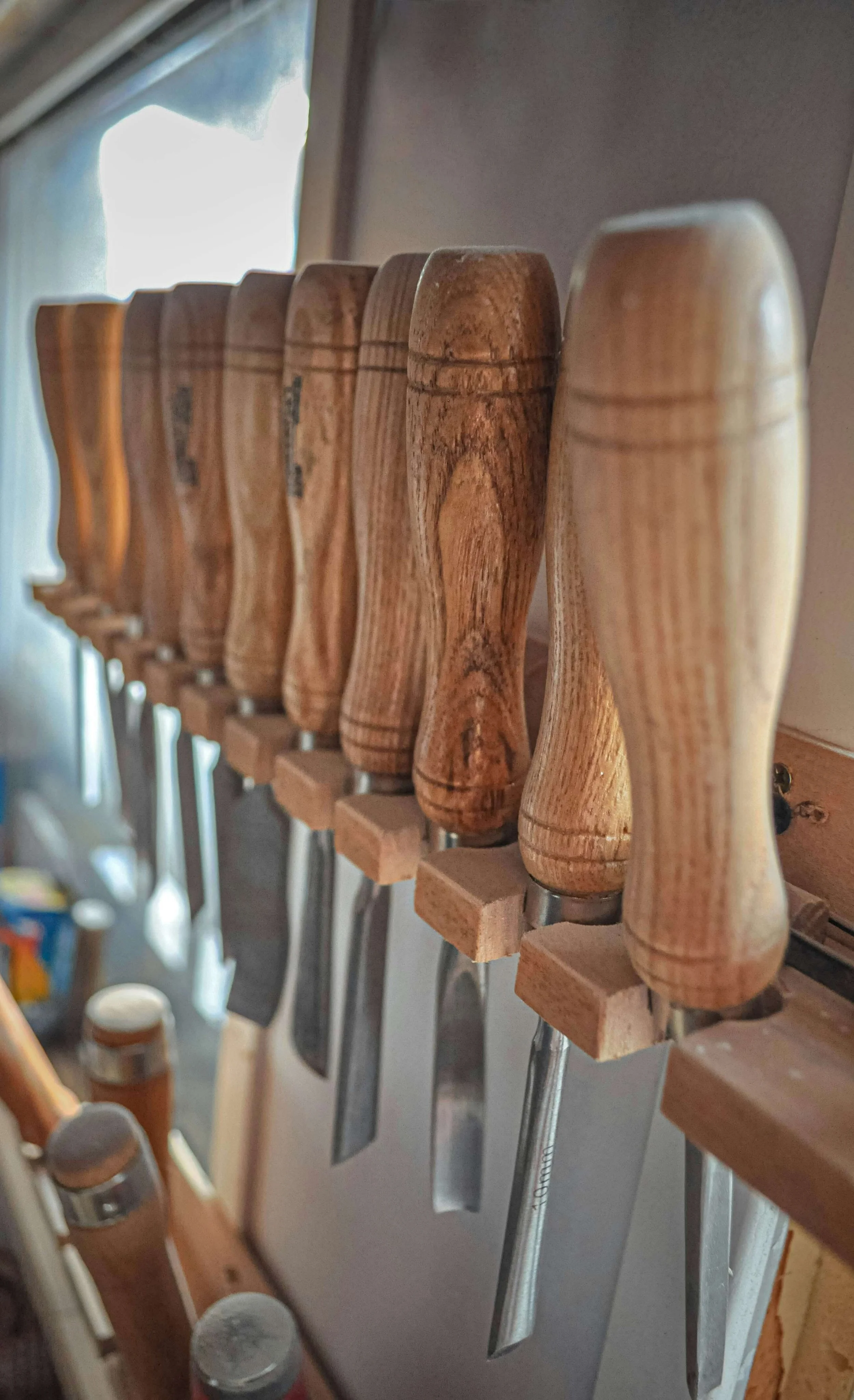
With few exceptions, the wood we use comes from within our region. Some from a local owner-operated mill in the Feather River country that saws timber from trees harvested nearby. Some we find ourselves — in the field, along the river, in salvage. Occasionally we source exotic species through a trusted dealer when a commission calls for something the region can't provide.
We think it matters where wood comes from. A tree that grew here, was milled here, and was made into something here carries a kind of continuity that imported material can't replicate. We try to honor that whenever we can.
Live-Edge Sequoia Bench
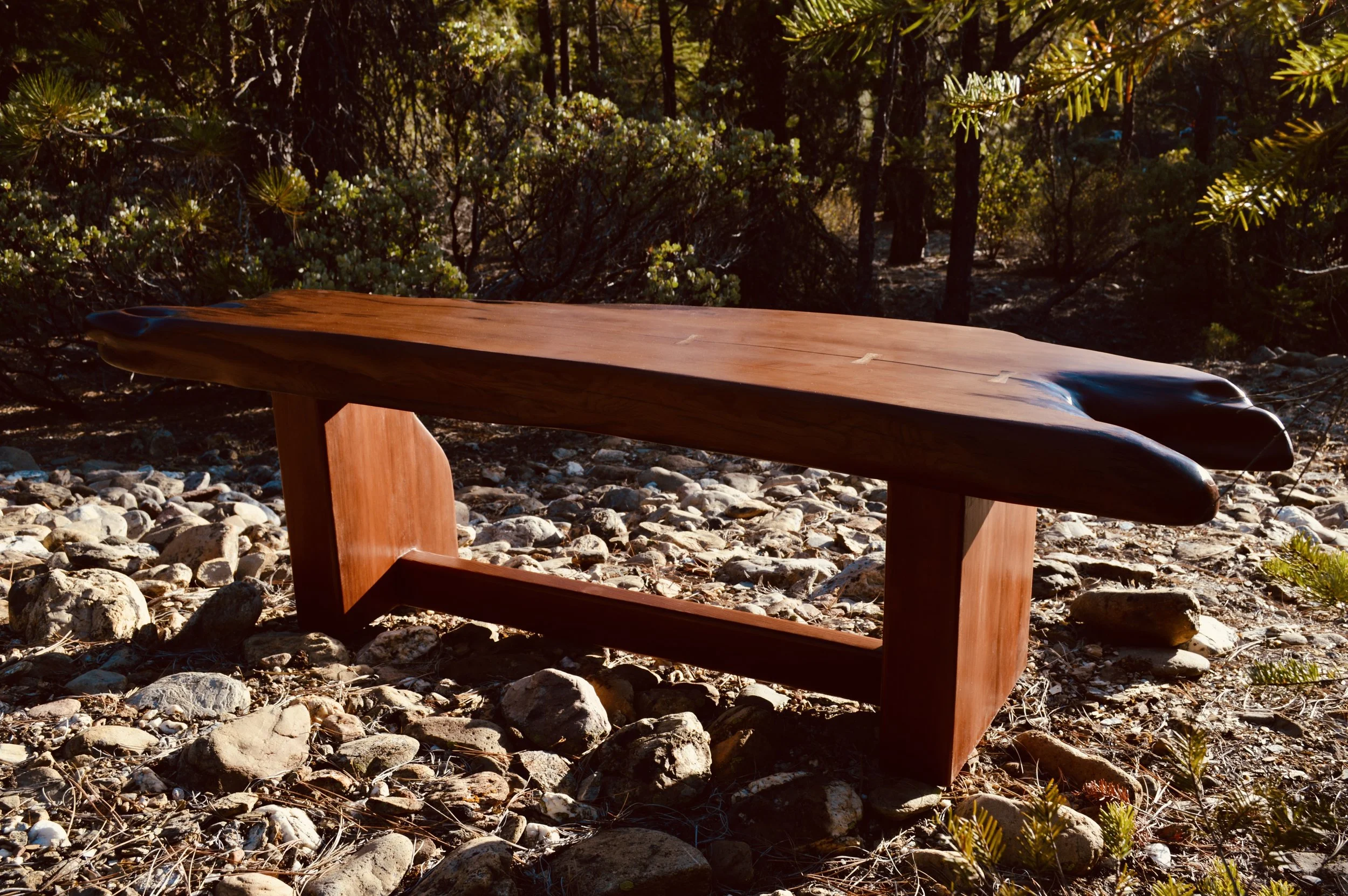
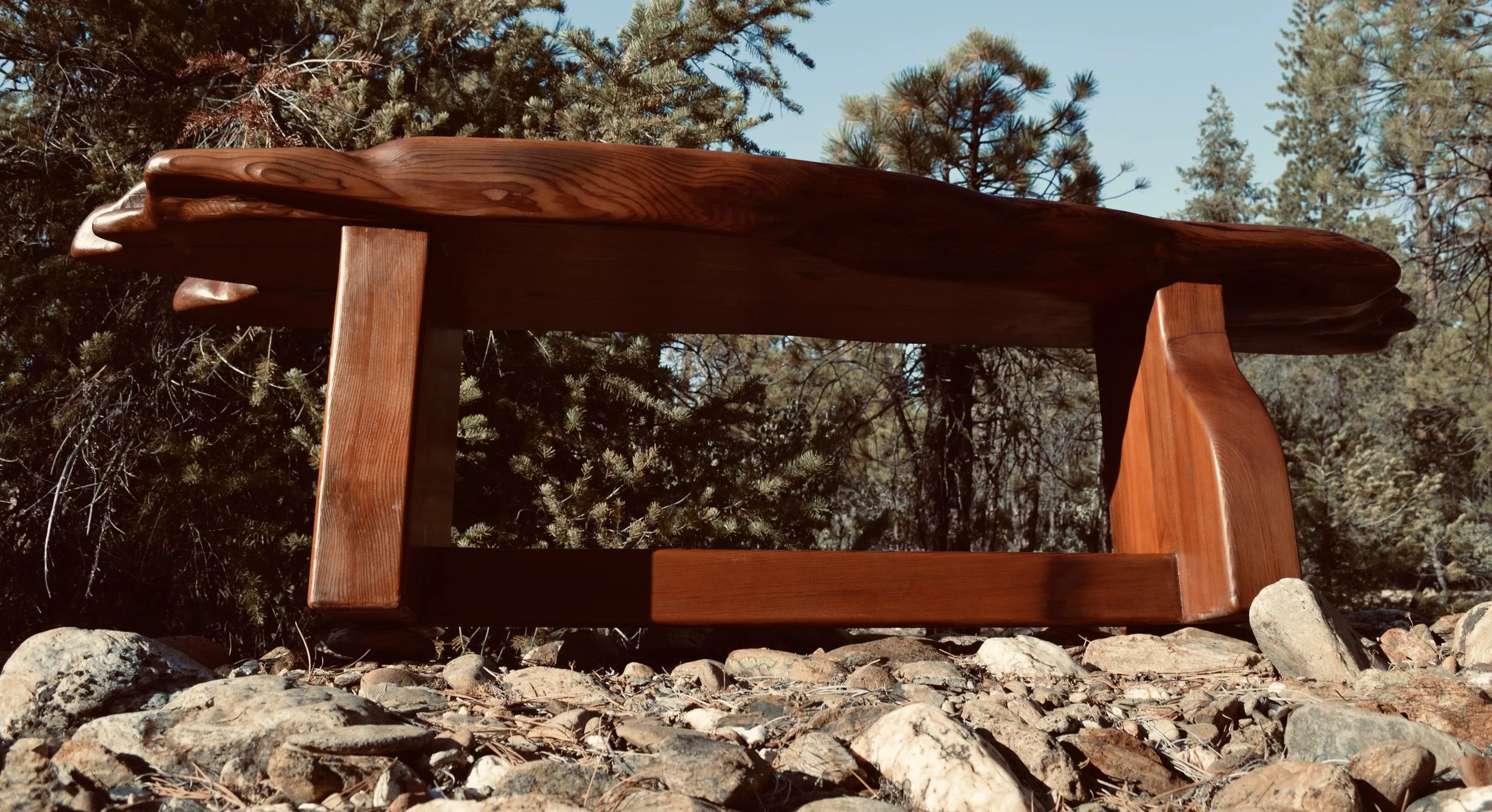
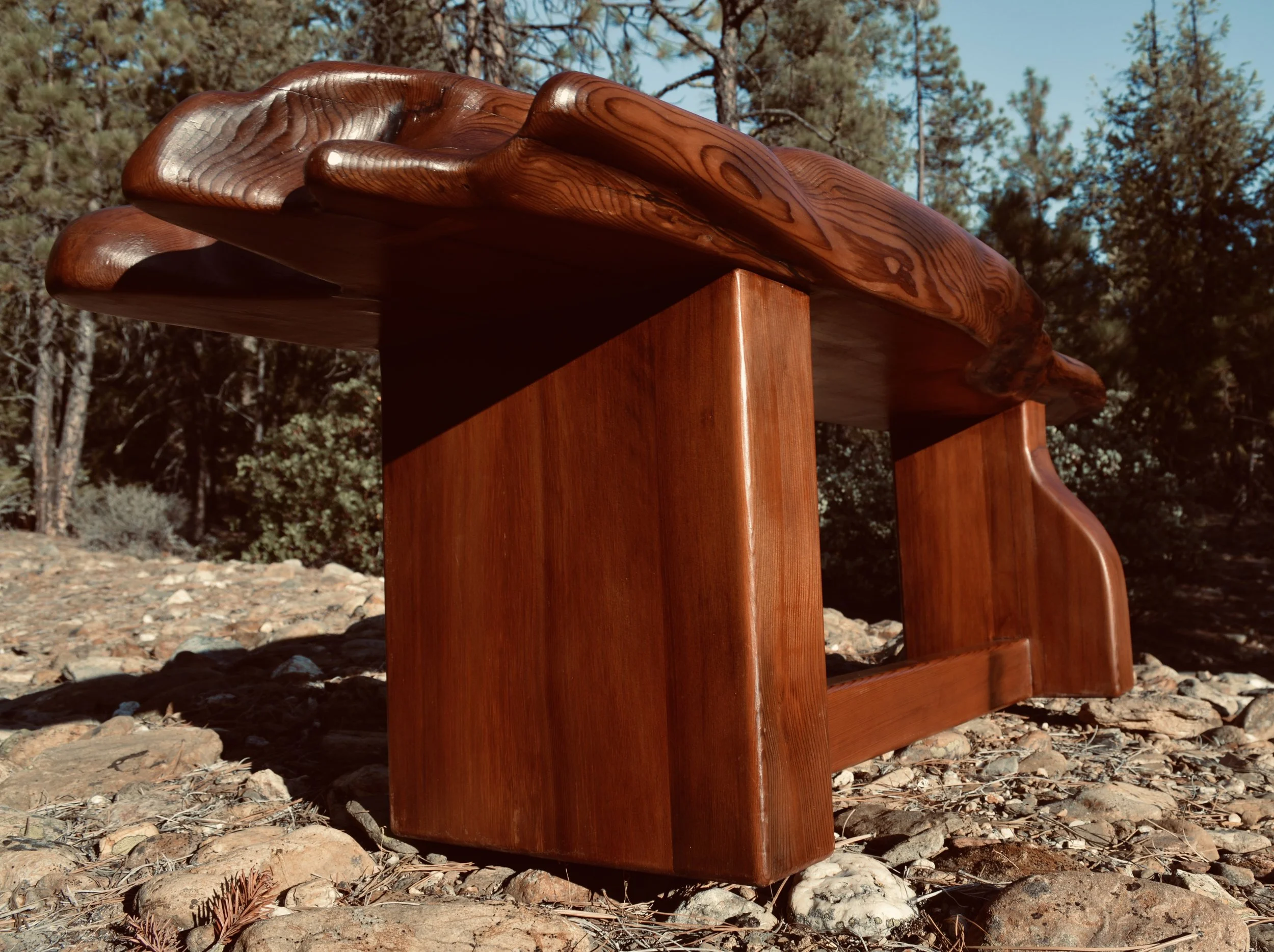
A bench that began as a slab and became something closer to sculpture. The top follows the natural edge of the wood — unforced, uncut — and the legs are shaped to carry that same unhurried quality, each one carved to echo the organic form above it. The result is a piece that feels inevitable, as though it could not have been made any other way.
Materials & Method The formal elegance of the slab was achieved by leaving it alone — simple finishing only. Legs are secured with 1 3/8" thick dowels and inlaid 1/2" into the slab. Finished with three coats of brushed-on lacquer, followed by a final coat of paste wax, hand-buffed.
Provenance Old-growth Giant Sequoia (Sequoiadendron giganteum), logged in Dillonwood Grove — now part of Sequoia National Park — between 1865 and 1904. Recovered in the 1980s after more than a century of weathering in the open, the driftwood character you see in the top is the record of that exposure. Old-growth Giant Sequoia of this age and figure is no longer harvested. When we find it, we use it with intention.
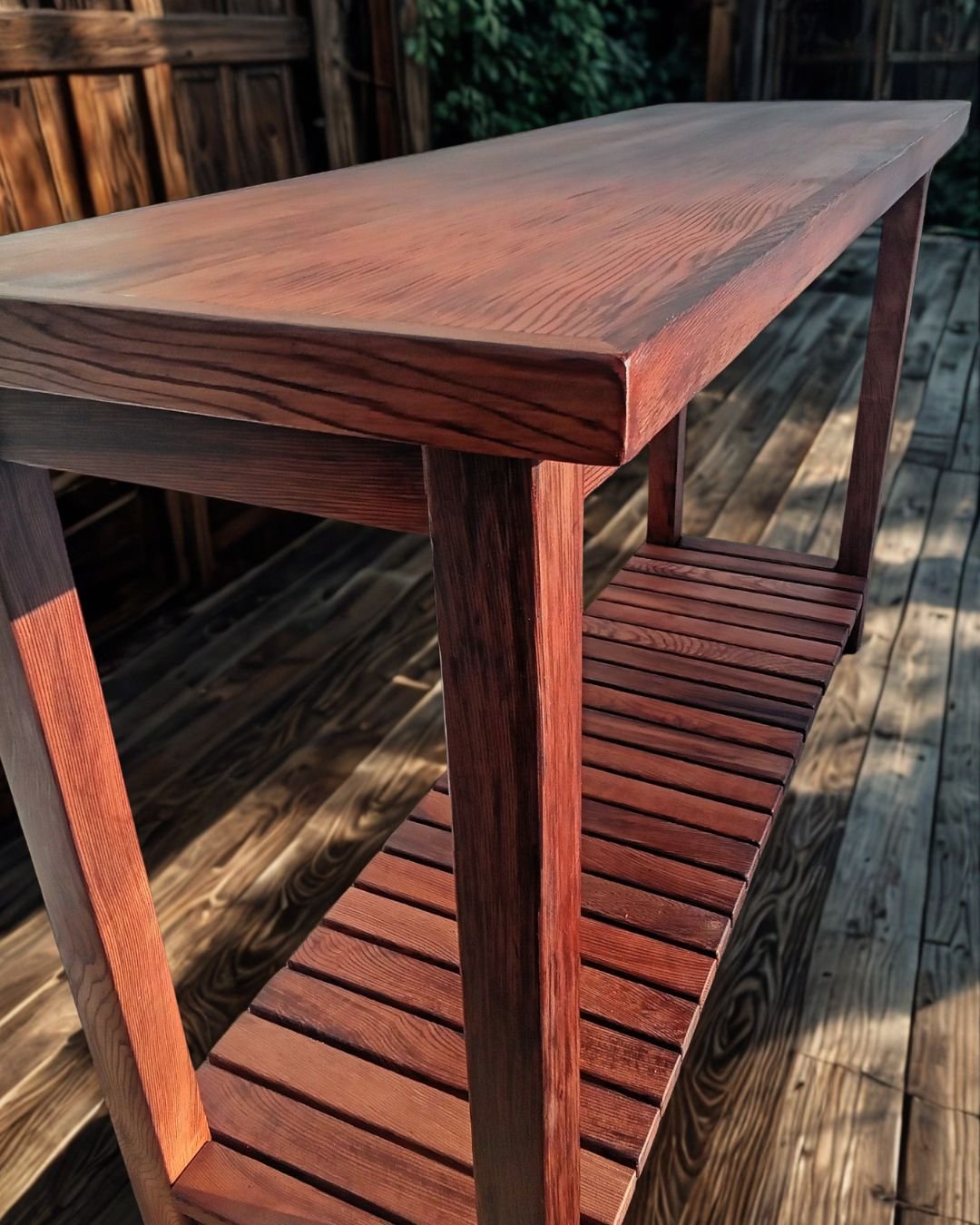
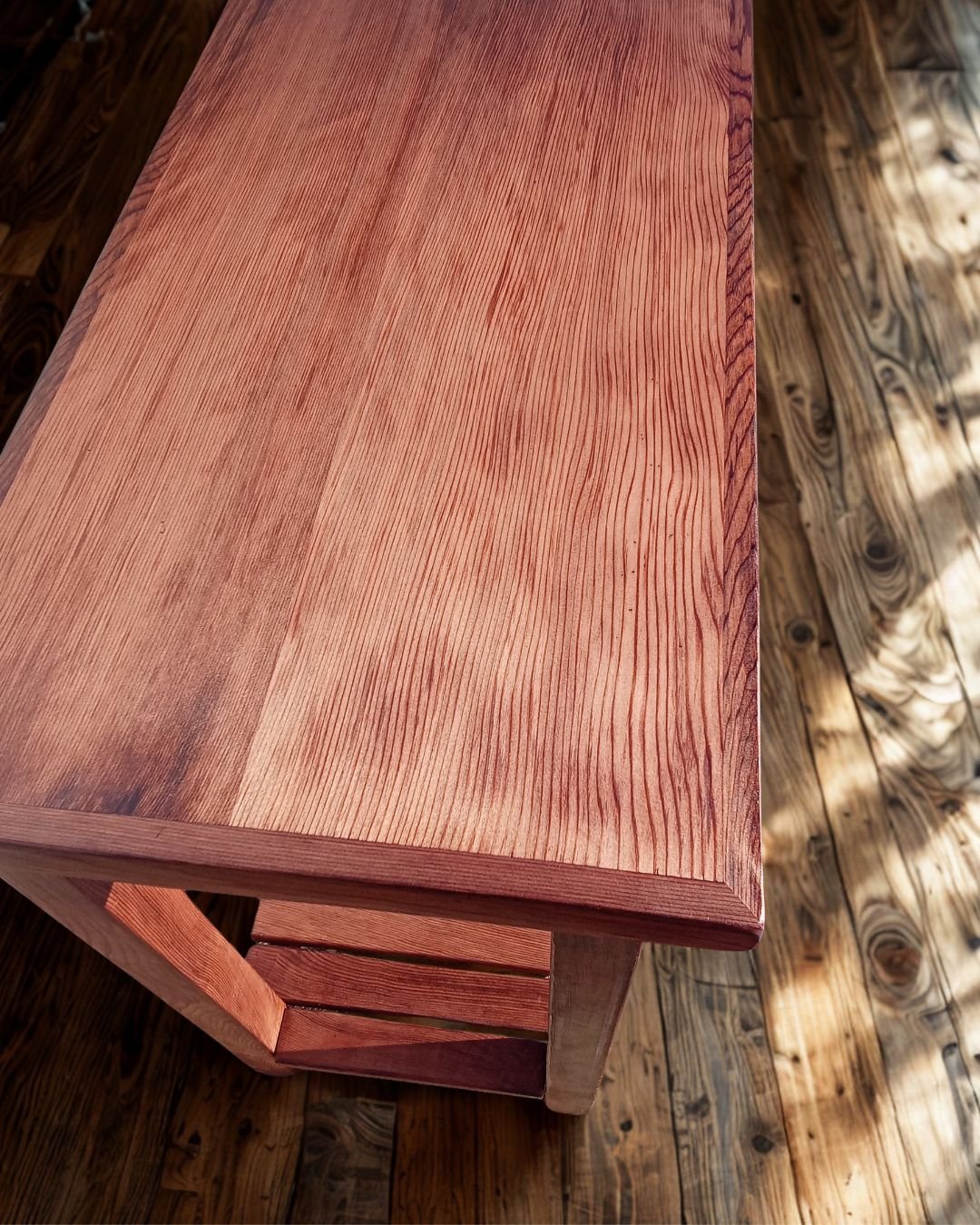
Console table
Old-growth Giant Sequoia (Sequoiadendron giganteum), slatted lower shelf, hand-finished. This one lives in a home on the Mendocino coast, where the light off the water finds it differently every hour of the day. The table is built to last as long.
Materials & Method Handmade dowel joinery throughout. The top is secured with hand-carved wooden buttons — a traditional technique that allows the wood to move seasonally without cracking. Leg levelers are custom-made. No metal fasteners.
Provenance The sequoia is a product of the clearcutting that took place between 1865-1904 in what is now Sequoia National Park. Old-growth stock like this, with this historical context, is of the rarest kind.
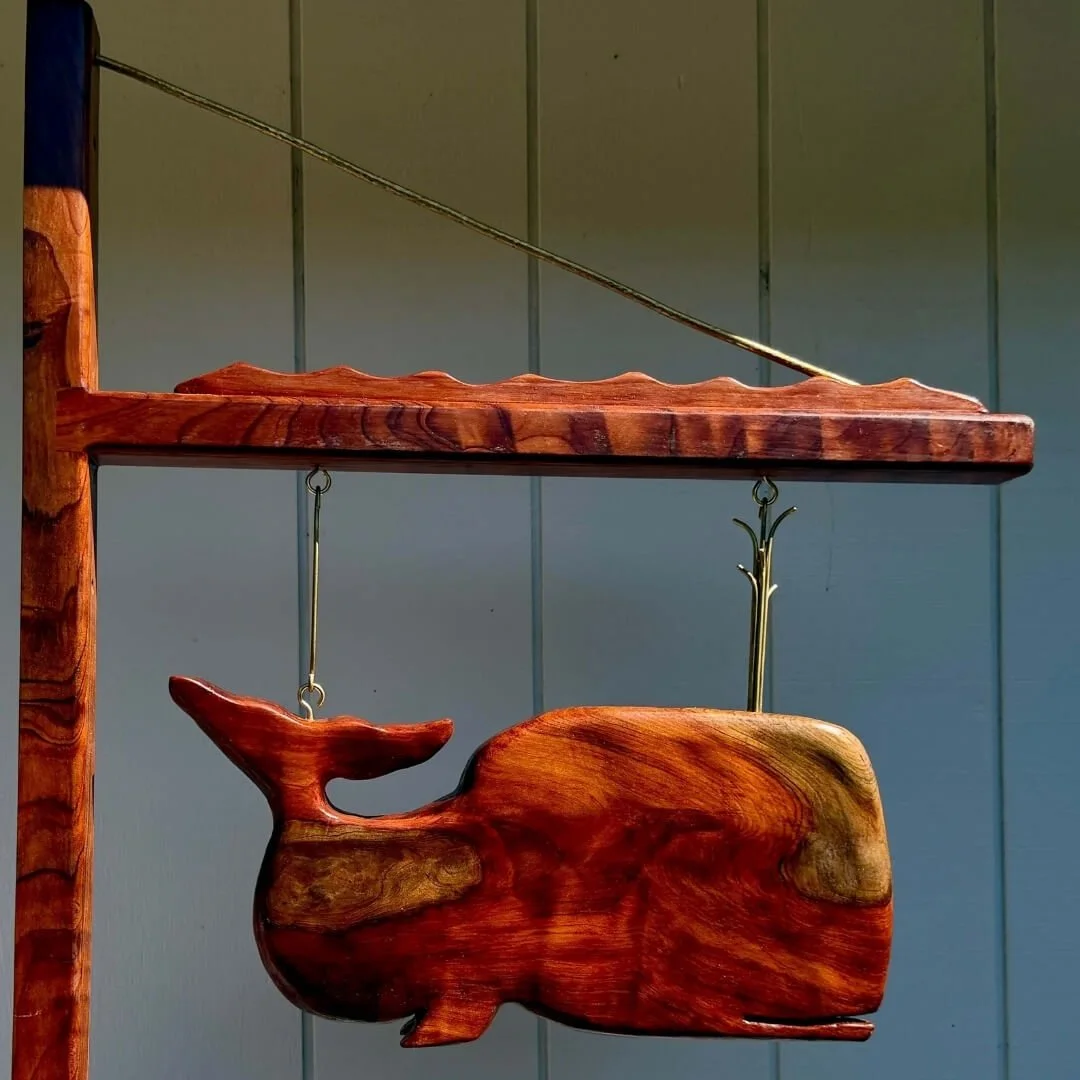
Materials & Method The mounting arm and hanging bracket are also coastal redwood. The angled support rod was hammered by hand. The hanging rods and eye screws were shaped by hand then threaded with a die. Every metal element was made specifically for this piece.
Provenance The redwood came from a salvaged old-growth slab. Coastal redwood of this figure is no longer commercially harvested. When we find it, we use it with intention.
Hanging whale sign
Coast Redwood (Sequoia sempervirens), hand-carved, with brass hardware. The grain in this piece is original to the tree — no two cuts of this wood look alike, which means no two signs ever will either. The brass was chosen deliberately: salt air turns it slowly, the way the coast ages everything it touches.
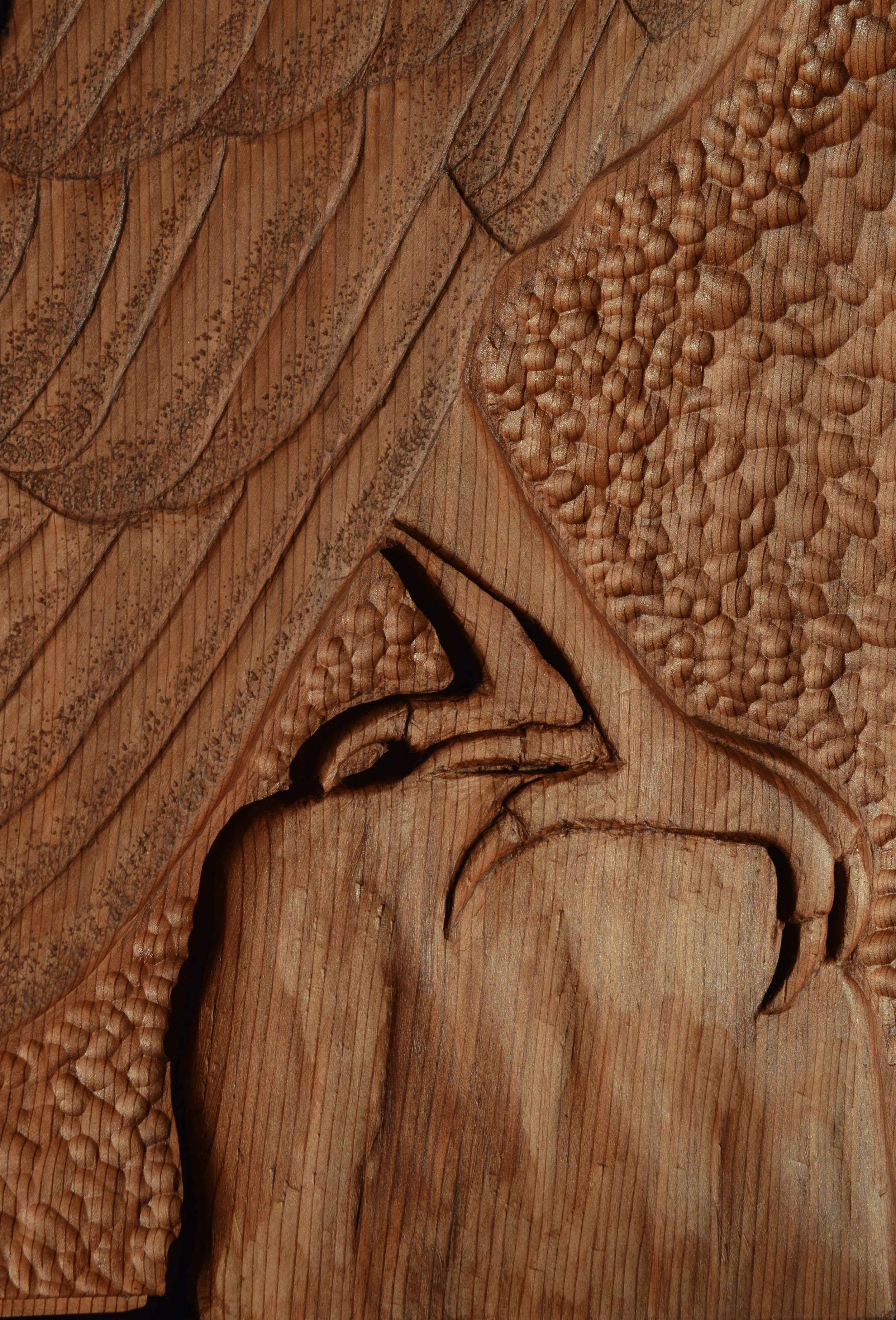
Relief Carving
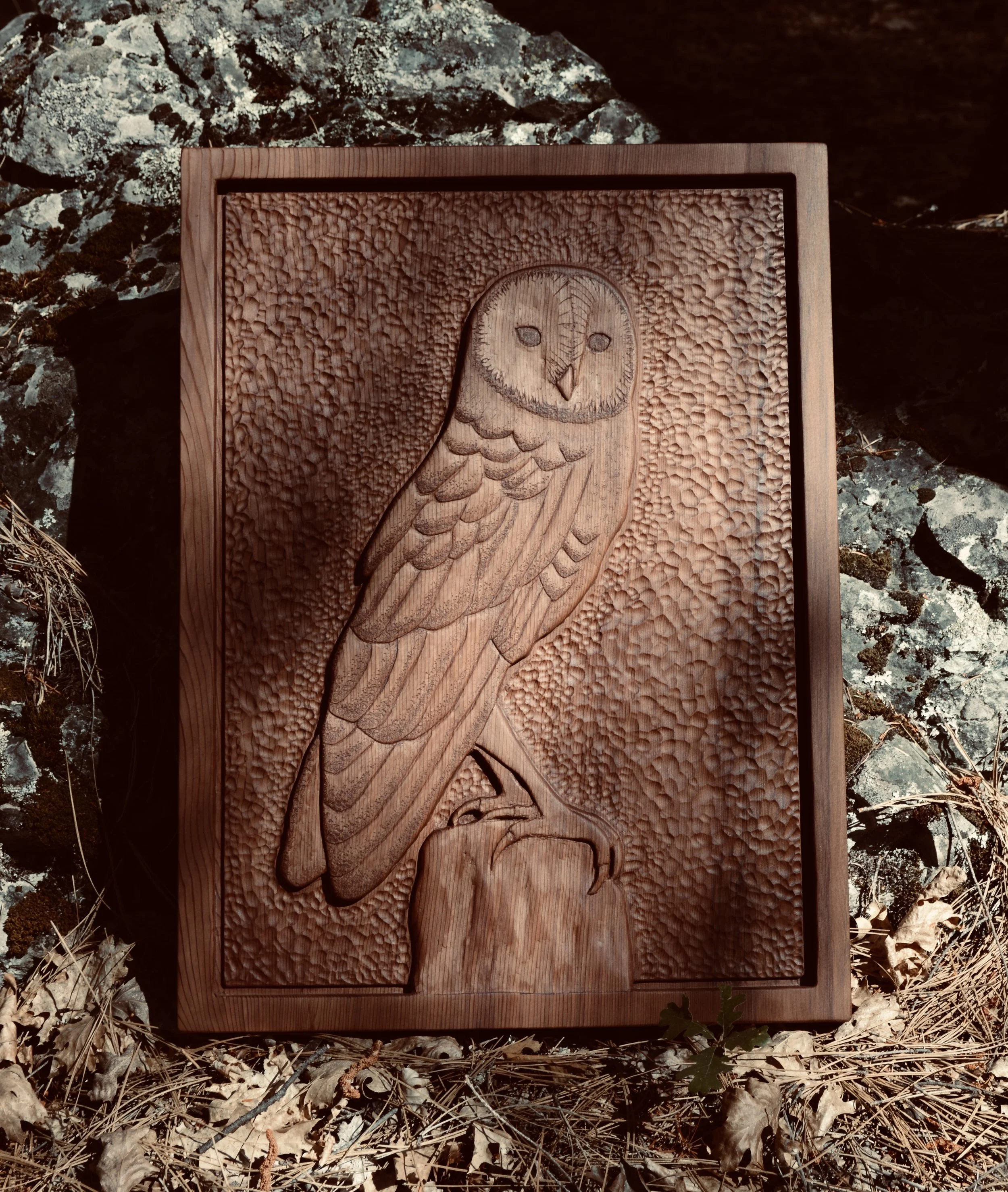
Old-growth Giant Sequoia (Sequoiadendron giganteum), single slab, hand-carved. The cell structure of this wood renders it ideal carving material. Modeled after an exquisite painting of Tyto furcata, the Barn Owl.
Materials & Method This slab is 2” thick (28”h x 20”w). All the work was done in the top 1/2”. The background is a traditional Japanese woodworking technique called Naguri.
Provenance This wood is not just rare, it is virtually unobtainable. This particular old-growth giant sequoia, aside from being ancient (1,500-3,000 years old) comes from a specific location in California, Dillonwood Grove in Sequoia National Park. This wood comes from trees that were cut between 1865-1904.
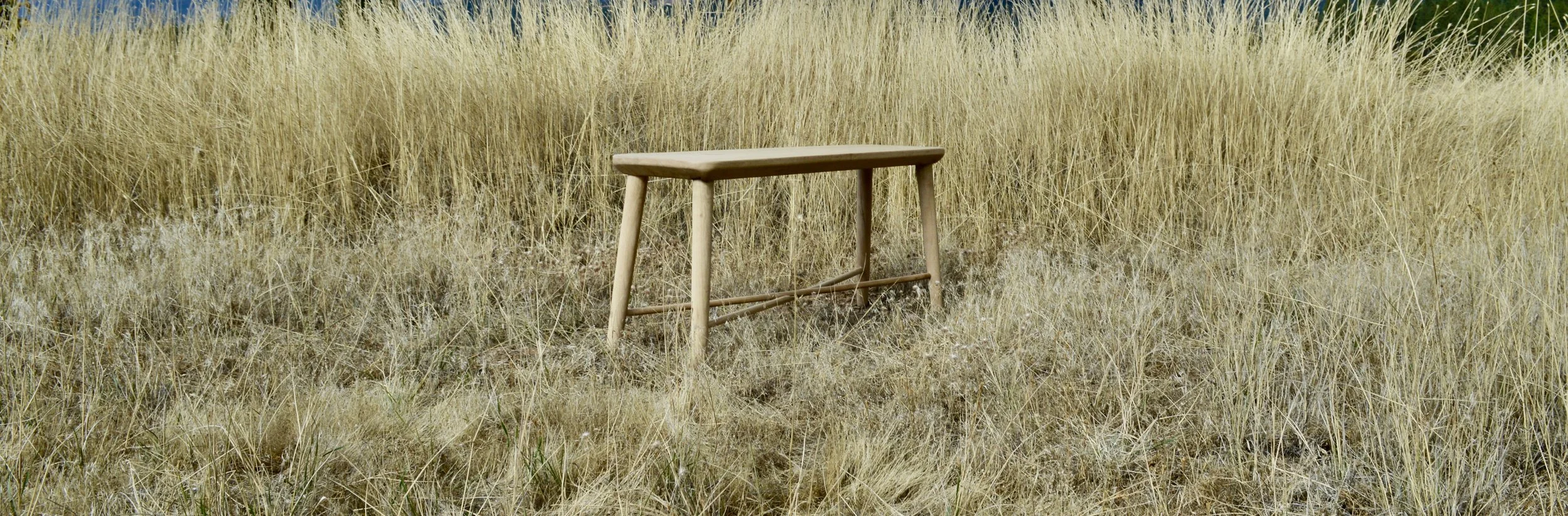
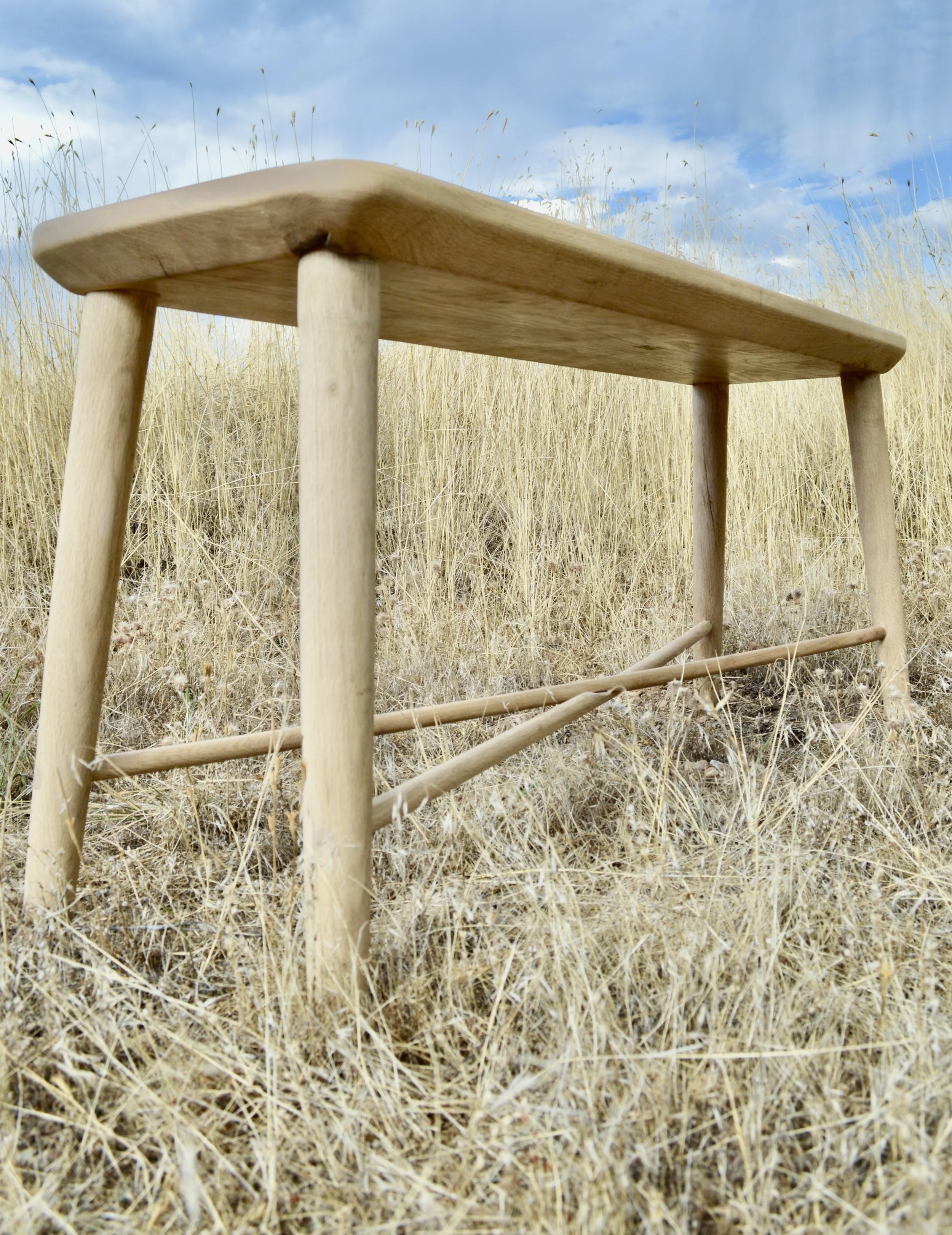
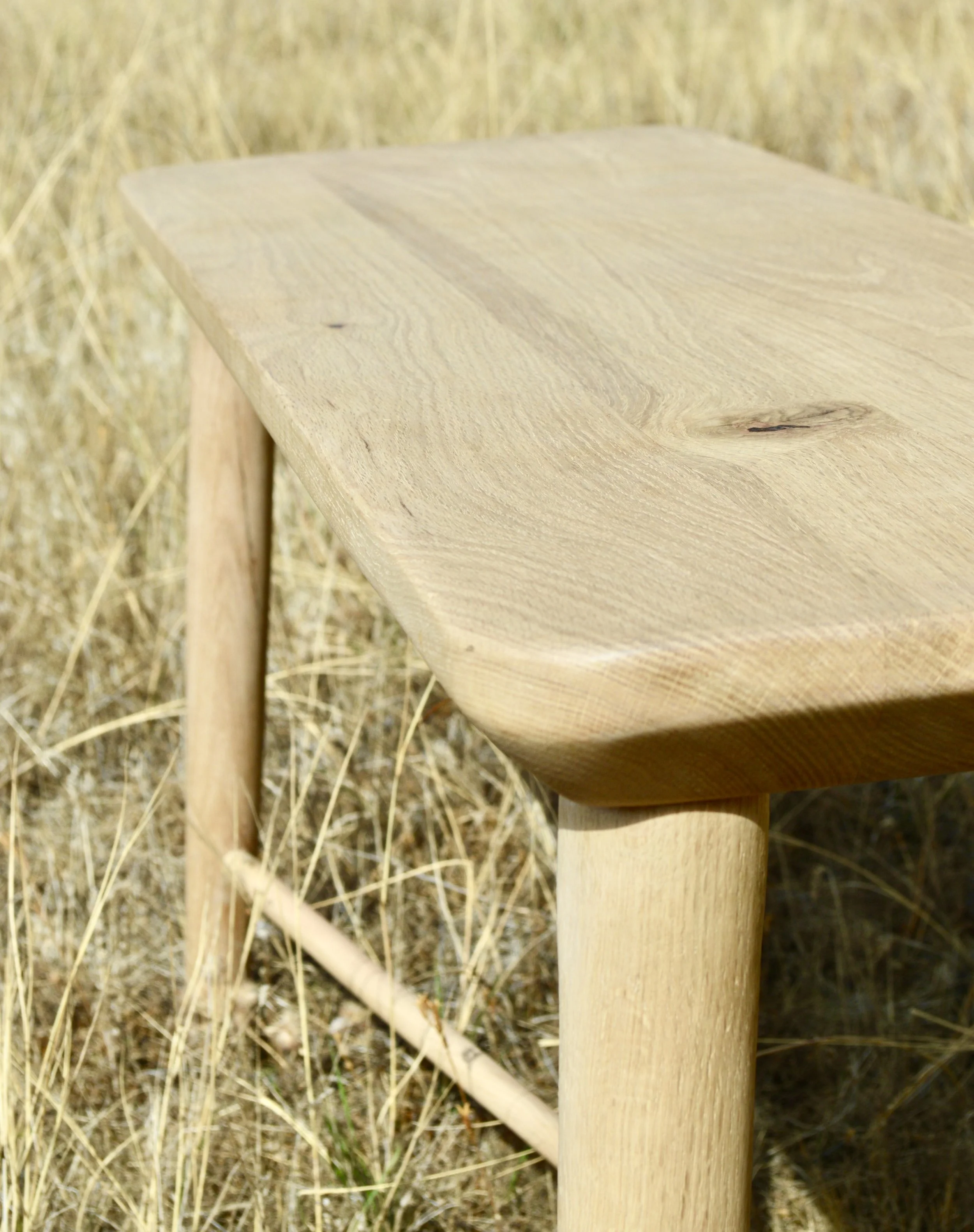
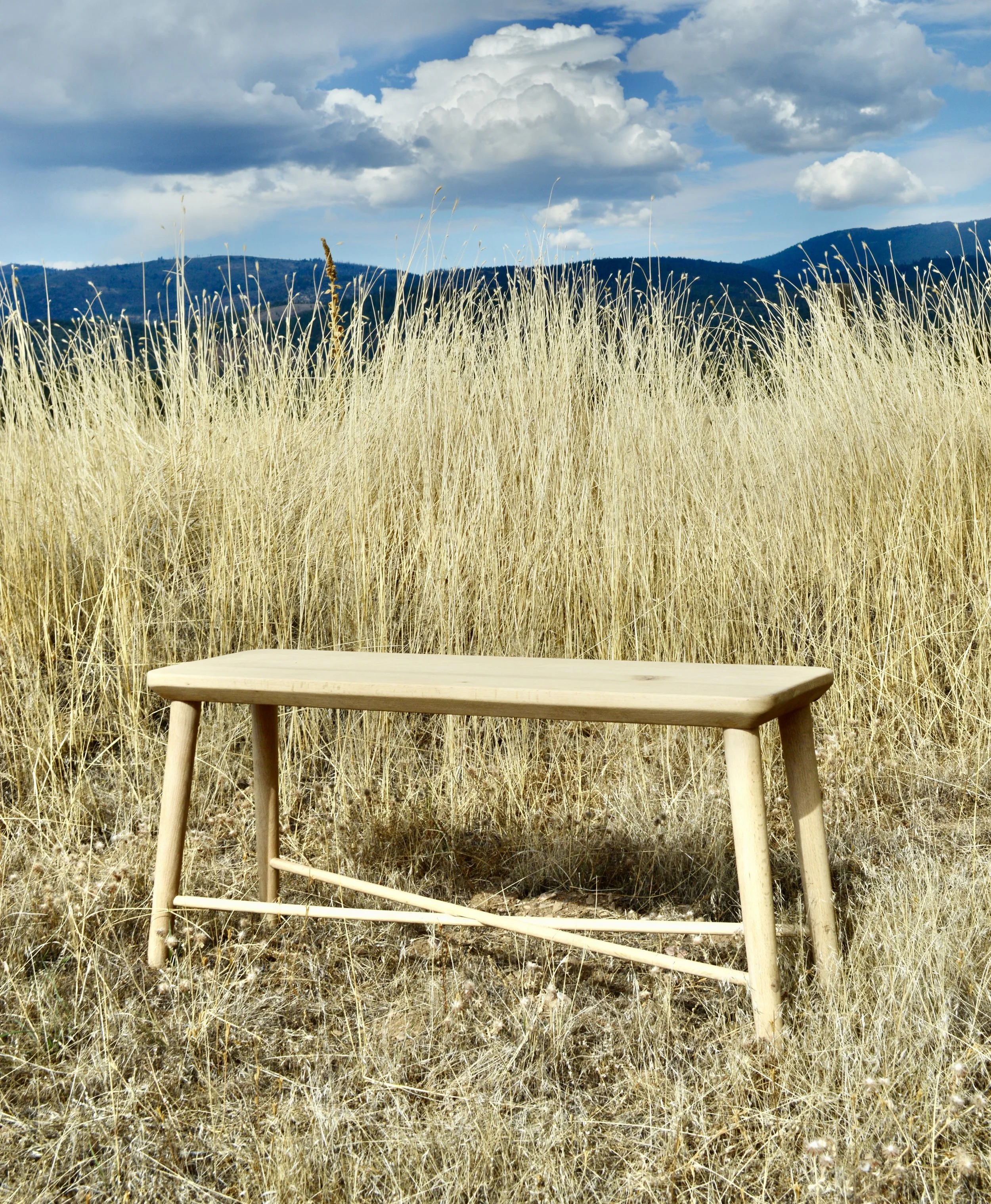
Black Oak Bench
Locally sourced Black Oak (Quercus velutina), hand-turned legs, homemade Danish soap finish.
Materials and Method. 2" thick seat, 2” to 1 1/2” tapered legs set at 10 degrees relative to each corresponding corner. Wedged, through round mortise and tenon lower cross bracing.
Provenance Black oak is the predominate Quercus of the Lost Sierra. This wood comes from a tree salvaged from the Dixie fire, the largest single-source wildfire in California history.
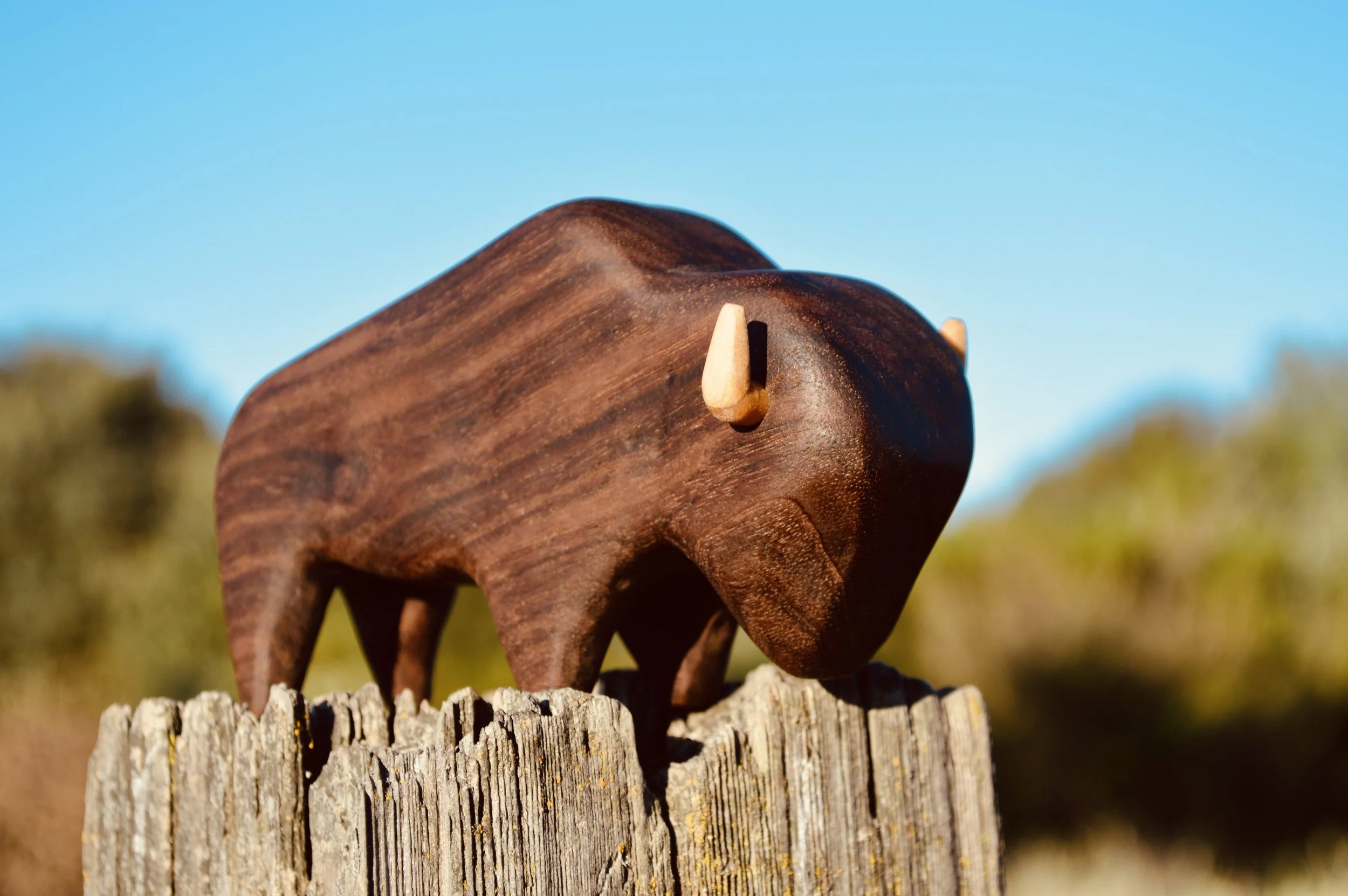
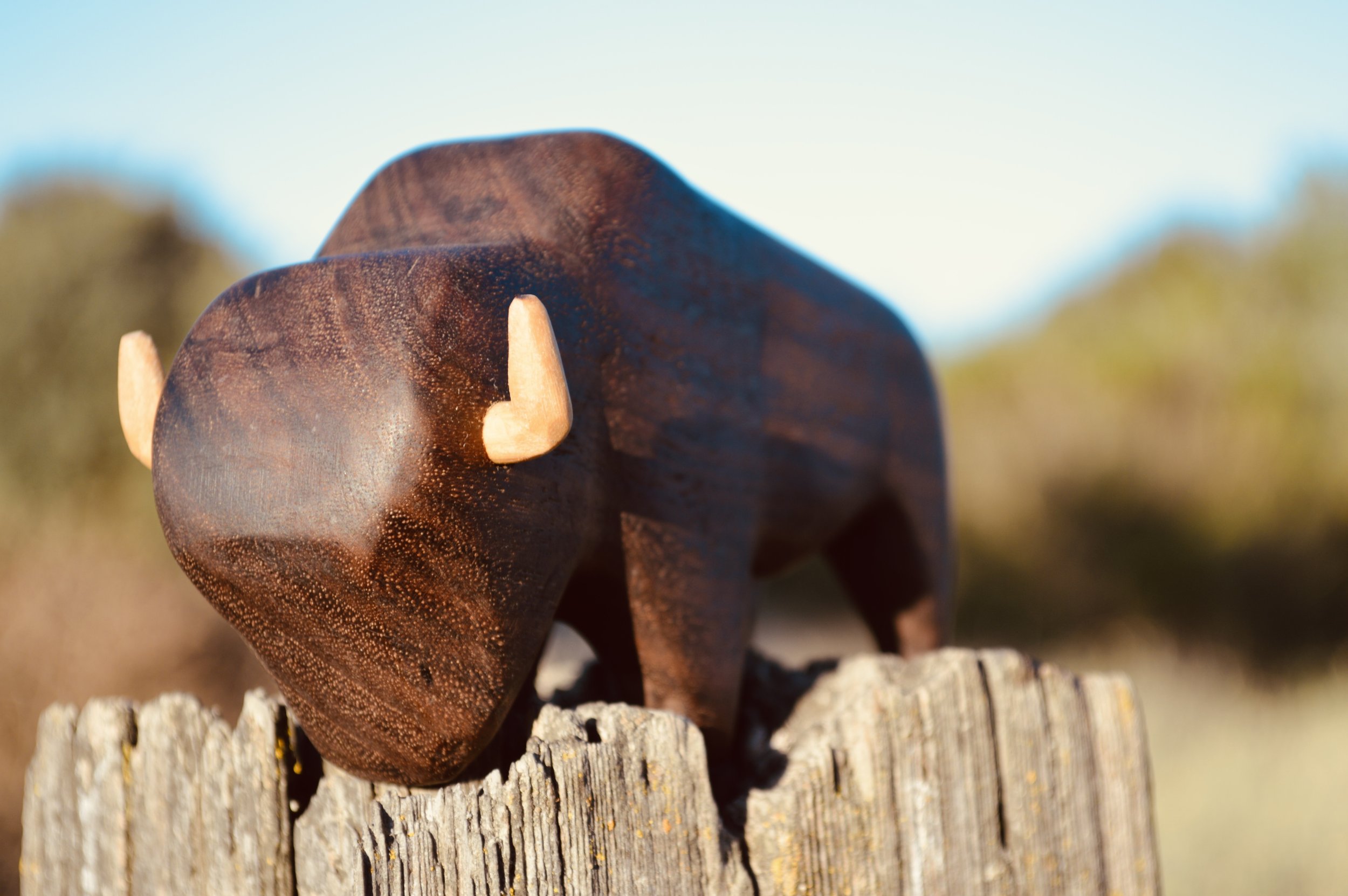
Bison sculpture
Hand-carved Black Walnut (Juglans californica) pine horn. There is something in walnut that suits this animal — the weight of the grain, the depth of the color. Carved from a single block, with nothing added except a sliver of pine for the horn. Fits in the palm of your hand.
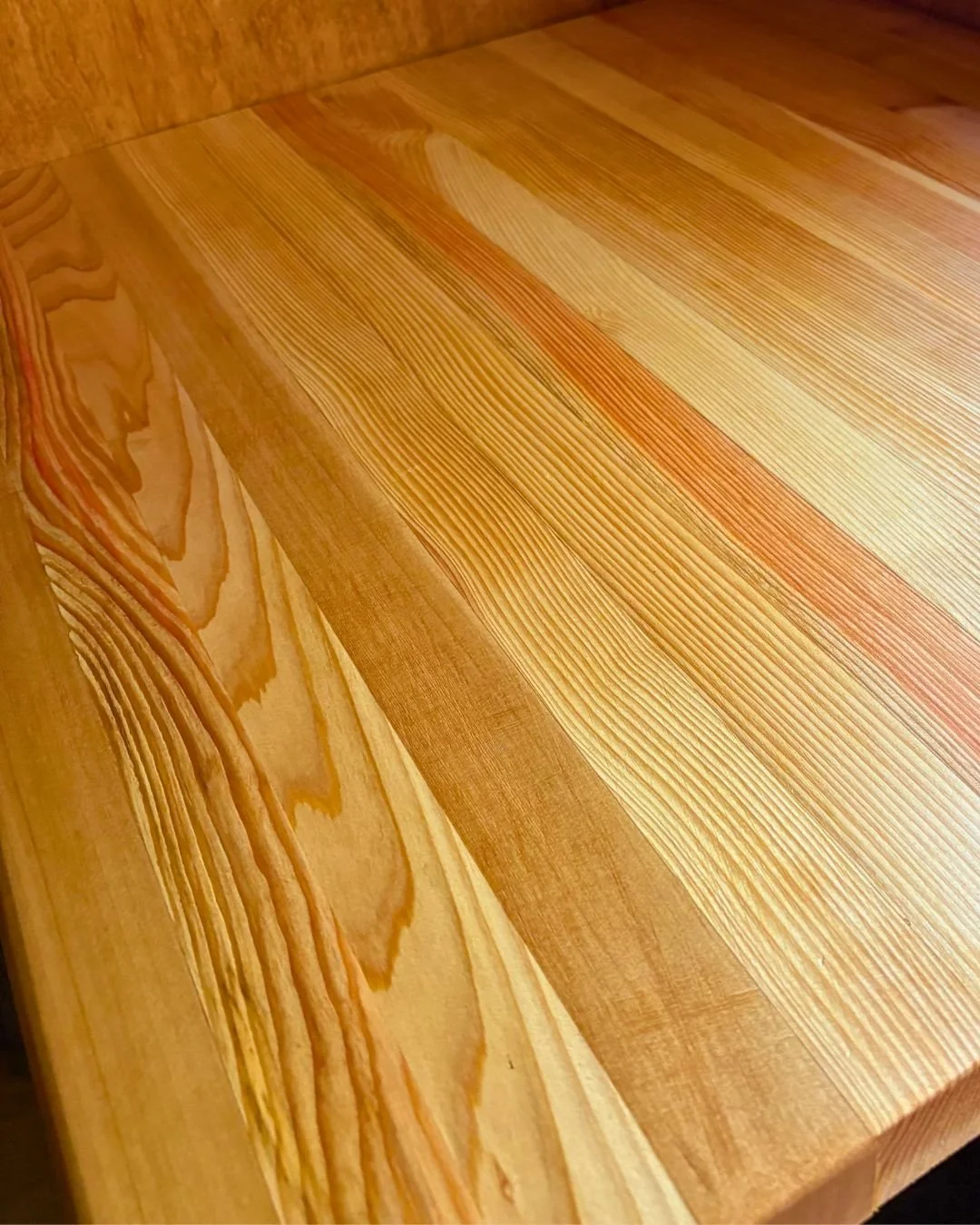
Butcher block countertop
Douglas Fir (Pseudotsuga menziesii) and Incense Cedar (Calocedrus decurrens). Built for a kitchen that needed a surface equal to real use. The two woods together make something neither could do alone — the fir for strength, the cedar for warmth. It sits now in a farmhouse in the middle of an almond orchard in the Sacramento Valley, which feels exactly right for a surface made to feed people.